
Composite bonding is a minimally invasive cosmetic dental procedure that uses a tooth-colored resin to repair chipped, cracked, or discolored teeth. It is a direct method to restore the natural shape and appearance of front teeth in a single visit. At Perfect Dental, this treatment offers a practical solution for patients in Taunton, Methuen, Manchester NH, Hyde Park, and Attleboro who want to improve their smile without extensive preparation.
What Is Composite Bonding?
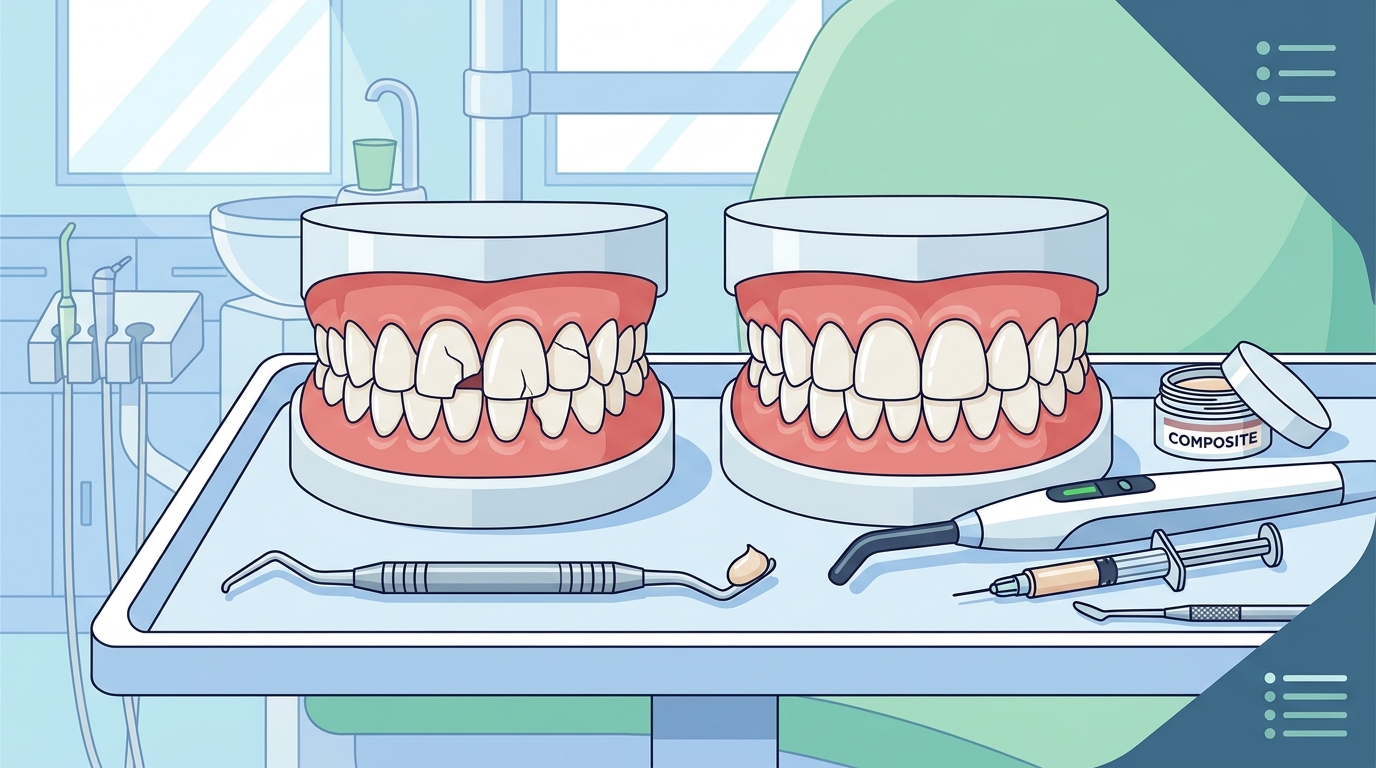
Composite bonding is a dental procedure that applies a tooth-colored composite resin to the surface of a tooth to repair damage or improve aesthetics. The material is shaped and hardened with a special light to match the surrounding teeth. This technique is distinct from porcelain veneers, which are custom-made in a lab and require more tooth preparation.
How the Material Works
The composite resin is a durable material that bonds directly to the tooth structure. It is designed to withstand the forces of chewing while maintaining a natural appearance. Because it is tooth-colored, it blends seamlessly with your existing smile, making it an ideal choice for front teeth.
The Bonding Process for Chipped Teeth
Fixing a chipped front tooth with bonding typically involves a straightforward, single-visit process. The procedure is efficient and allows patients to leave the office with a restored smile the same day. Understanding the steps helps set realistic expectations for the treatment.
Step-by-Step Procedure
- Preparation: The tooth surface is lightly etched to create a rough texture for better adhesion. In some cases, no drilling is required if the chip is minor.
- Application: The composite resin is applied in layers to build up the missing structure.
- Shaping: The dentist sculpts the material to match the natural contours of the tooth.
- Curing: A special light hardens the resin, making it durable and stable.
- Polishing: The final result is polished to a smooth finish that mimics natural enamel.
Benefits of Choosing Composite Bonding
Composite bonding offers several advantages for patients dealing with minor dental trauma or cosmetic concerns. It is a conservative option that preserves more of the natural tooth structure compared to other restorative treatments. This makes it a popular choice for front teeth where aesthetics are a priority.
Key Advantages
- Minimally Invasive: Little to no tooth removal is necessary, preserving the integrity of the natural tooth.
- Cost-Effective: Bonding is generally less expensive than porcelain veneers or crowns.
- Quick Results: The entire process is usually completed in one appointment.
- Reversible: If you are not satisfied with the result, the material can be removed and redone.
Composite Bonding vs. Porcelain Veneers
While both bonding and veneers can improve the appearance of chipped teeth, they differ in durability, cost, and preparation requirements. Choosing the right option depends on the extent of the damage and your long-term goals. Understanding these differences helps you make an informed decision with your dentist.
Comparison of Options
| Feature | Composite Bonding | Porcelain Veneers |
|---|---|---|
| Preparation | Minimal or no drilling | Requires tooth reduction |
| Duration | Single visit | Two to three visits |
| Durability | 5 to 7 years | 10 to 15 years |
| Cost | Lower | Higher |
For minor chips, bonding is often the preferred choice. For more extensive damage or multiple teeth, veneers may be recommended. Your dentist at Perfect Dental will evaluate your specific case to determine the best approach.
Caring for Your Bonded Teeth
Maintaining the longevity of your composite bonding requires consistent oral hygiene and some lifestyle adjustments. While the material is durable, it is not as stain-resistant as porcelain. Taking simple steps can help your restoration look its best for years to come.
Maintenance Tips
- Brush and Floss: Maintain a rigorous daily oral hygiene routine to prevent decay around the bonded area.
- Avoid Staining Agents: Limit consumption of coffee, tea, red wine, and tobacco to prevent discoloration.
- Protect Your Teeth: Avoid biting hard objects like ice, pens, or fingernails, which can chip the bonding material.
- Regular Checkups: Schedule routine dental cleanings and exams to monitor the condition of your restoration.
Key Takeaways
- Composite bonding is a minimally invasive procedure that repairs chipped teeth using tooth-colored resin.
- The treatment is typically completed in a single visit, offering immediate cosmetic improvement.
- Bonding is a cost-effective alternative to porcelain veneers for minor to moderate damage.
- Proper care, including avoiding hard objects and staining agents, extends the life of the restoration.
- Perfect Dental offers this service across multiple locations in Massachusetts and New Hampshire.
- Consultation is essential to determine if bonding is the right choice for your specific dental needs.
Frequently Asked Questions
How long does composite bonding last?
With proper care, composite bonding can last between 5 and 7 years. Factors such as diet, oral hygiene habits, and the extent of the initial damage can influence longevity. Regular dental checkups help ensure the restoration remains intact.
Does composite bonding hurt?
The procedure is generally painless. Because it is minimally invasive, anesthesia is often not required unless the chip is deep or close to the nerve. Your dentist will discuss comfort measures with you during the consultation.
Can I eat normally after bonding?
Yes, you can eat normally after the procedure. However, it is recommended to avoid biting into very hard foods or objects for the first 24 hours to allow the bond to fully set. After that, normal eating is safe, but caution with hard items is still advised.
Is composite bonding covered by insurance?
Coverage varies by plan. Insurance may cover bonding if it is deemed medically necessary to repair a broken tooth, but cosmetic applications are often not covered. Perfect Dental can help verify your benefits before treatment begins.
Where can I get composite bonding in Taunton?
Perfect Dental in Taunton offers composite bonding as part of its cosmetic dentistry services. The office is located at One Washington Street, and you can schedule an appointment to discuss your options with the local providers.
Conclusion
Composite bonding is a versatile and effective solution for fixing chipped front teeth. It offers a natural-looking result with minimal disruption to your daily routine. If you are considering this treatment, the team at Perfect Dental is ready to help you achieve a confident smile. to schedule a consultation at a location near you.